For carriers

Legal help for carriers who've been scammed or not paid

We understand. Carriers go through hard times. You haul the load, you do the work, and the money never comes. Sometimes the company you trusted never existed.

You are not the only one. Online cargo theft has risen 1,500% over the past four years, according to the American Trucking Associations. Small carriers are hit the hardest.

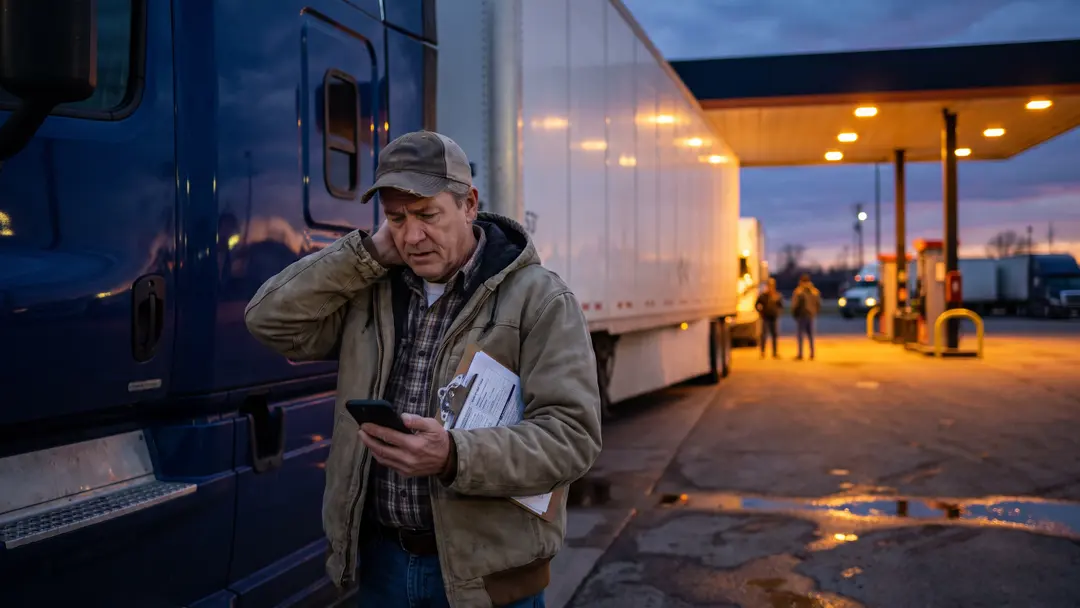
Owner-operator at a truck stop at dusk checking his phone after a load he delivered went unpaid
You moved the freight. When the money never comes, you need somewhere to turn.

We're here to help you

You don't have to handle this alone.

If you have a complaint, go to Freight Broker Complaint. We'll help you investigate it, and we'll put together all the documents and resources for you, so you know where you stand.

An investigator reviews the facts, contacts the broker named in your complaint and gives it a fair chance to respond. Filing is free. If your case needs an attorney, the National Transportation Attorney Network is here for that next step.

Freight Broker Complaint logo: gold sword behind a black shield with scales of justice, inside a gold laurelFreight Broker ComplaintFile a free complaint. We investigate it and put your documents together.

How the scams happen

Know how they work, and you can see them coming.

Freight fraud is organized now. It goes after the carriers who move fast and can least afford a loss. Every one of these scams counts on the same thing: you accepting who someone says they are without proving it.

Verify or fail

  • Check every company by its USDOT and MC number, not its name.
  • Match the phone and email to what FMCSA has on file.
  • Never change where your paperwork or payment goes because of one email.
  • Keep a load file: rate confirmation, bill of lading, proof of delivery, invoice, messages.

Chameleon companies

Chameleon companies recycle their identity. When a company has unpaid bills, complaints or safety problems, the same people open a new company with a new name and new authority and keep going. The carrier who books with them sees a clean record and has no idea who they're really dealing with.

Warning signs

  • Brand-new authority with a story that sounds like years in business
  • Phone numbers, addresses or people that match another company
  • Pressure to book fast before you have time to check

Fake companies on the load board

Scammers post loads on load boards using a made-up company, or a real company's name and MC number. The rate looks good and the paperwork looks right. You haul the freight, send your invoice and find out the company you booked with never existed, or the real company never heard of you.

Warning signs

  • An email address that doesn't match the company's own domain or the contact FMCSA has on file
  • A rate well above the market for that lane
  • A contact who only texts or only uses a free email account

Agents working with scammers

Some brokers work through agents. Most are honest. Some work with third-party scam companies behind the broker's back. They reroute your paperwork, change where your payment goes or hand the freight to someone else. By the time anyone notices, the money is gone.

Warning signs

  • "Send the POD to this different email" in the middle of a load or after delivery
  • New payment or factoring instructions you didn't ask for
  • A different contact name than the one on your rate confirmation

The broker doesn't pay

Sometimes it isn't a fake company at all. A real broker takes the load, the shipper pays the broker, and the carrier who moved the freight waits. Thirty days turns into sixty. Calls stop getting returned. For a small carrier living on cash flow, one unpaid load can mean a missed truck payment.

Warning signs

  • Payment terms that keep changing after delivery
  • Short pays and deductions you never agreed to
  • No answer once the freight is delivered

Double brokering

A fraudster poses as a carrier and accepts the load. Then they repost it, pretending to be the broker. The real carrier hauls the freight. The fraudster collects the paperwork, gets paid by the real broker and disappears. The real carrier is left unpaid, and the chain of custody is broken.

Warning signs

  • A broker you've never heard of offering a load from a big shipper
  • A rate confirmation with a different company name than the pickup paperwork
  • Instructions not to contact the shipper or receiver directly

What to do right now

If it already happened, start here.

  1. Stop. Don't send more freight, money or paperwork to that company.
  2. Save everything. Rate confirmation, bill of lading, proof of delivery, invoices, emails, texts, call logs and the load board posting.
  3. Check them by number. Look up the USDOT and MC numbers in FMCSA's records and compare the phone and email with what FMCSA has (FMCSA fraud and identity theft).
  4. File a free complaint with Freight Broker Complaint. A person reviews it and contacts the broker for its side.
  5. Report it to FMCSA through the FMCSA Complaint Center.
  6. Talk with a transportation attorney about your options. Contact us below.
1,500%

Rise in online cargo theft over the past four years, according to the American Trucking Associations.

Source: American Trucking Associations, as reported by Fox News

When you need an attorney

The right attorney understands freight.

Some problems are solved with the paperwork and a clear demand. Others need an attorney: a broker who won't pay a large invoice, a claim against a broker's bond or trust, stolen equipment, a fraud case or a contract fight.

The National Transportation Attorney Network lists attorneys who work in transportation, trucking and logistics law in all 50 states and DC. No truck-accident injury attorneys. This network is carrier first.

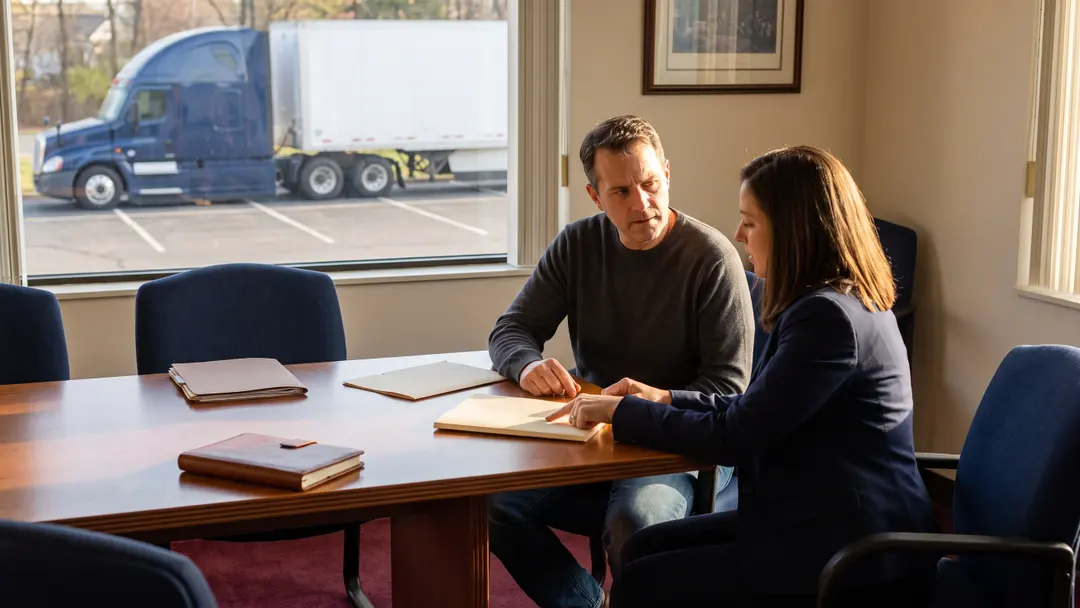
Trucking company owner meeting a transportation attorney at a conference table about his case
When a carrier has been done wrong, the right transportation attorney starts with the paperwork.

Get educated

Don't get yourself in a situation where you need an attorney.

Freight University teaches carriers how to verify brokers, read rate confirmations and run the back office. It's free.

Trucking company owner in his cab checking a broker on a laptop before booking a load
The best way to avoid needing an attorney is to verify every load before you book it.

Carriers, contact us

If you're a carrier and you need assistance, contact us.

Tell us what happened. A person reads every message and gets back to you.

A person reads every message. We use your information only to answer you. See our privacy policy.

Questions carriers ask

Does it cost anything to get help?

No. Contacting us is free, and filing a complaint with Freight Broker Complaint is free. If you hire an attorney, the fee is agreed between you and the attorney.

Will someone contact the broker?

When you file a complaint with Freight Broker Complaint, an investigator contacts the broker named in it and gives the broker a fair chance to respond and send its paperwork.

Do I have to hire an attorney?

No. Some problems are solved with the paperwork and a clear demand. You decide whether to talk with an attorney and whether to hire one.

Do you give legal advice?

No. We are not a law firm and do not give legal advice. Transportation attorneys are independent and give their own advice.

Sources